01
Art
Blakey
Drums / bandleader
His Jazz Messengers made the bandstand a proving ground for generations of players, with a fierce, blues-inflected ensemble sound.
Explore profile →Bebop's restless invention met the blues, gospel and rhythm and blues. In the clubs and studios of the 1950s, a new sound took shape: earthy, urgent and unmistakably alive.
Explore the story01 / The birth
Hard bop emerged in the early to mid-1950s. Its players carried bebop's speed and harmonic daring into music with a heavier pulse and deeper roots in Black American popular and sacred traditions.
There was no single moment when hard bop began. Miles Davis and Sonny Rollins were exploring a more forceful, blues-centered language; the Clifford Brown–Max Roach Quintet gave it brilliance and drive.
Art Blakey and Horace Silver brought a particularly vivid blend of gospel feeling, blues phrasing and collective energy to the Jazz Messengers. Their recordings helped define the sound associated with hard bop and Blue Note.
02 / The protagonists
Hard bop was a conversation among bands, composers and soloists. These four names offer a way in.
His Jazz Messengers made the bandstand a proving ground for generations of players, with a fierce, blues-inflected ensemble sound.
Explore profile →A founding Messenger whose memorable themes and gospel-infused piano helped shape the Blue Note sound.
Explore profile →With Max Roach, Brown brought warmth, virtuosity and melodic clarity to a pivotal mid-1950s quintet.
Explore profile →A bebop innovator whose partnership with Brown became central to hard bop's early development.
Explore profile →03 / First spins
Three recordings that open different doors into the sound.
Smithsonian Music: JazzCarnegie Hall: History of Hard BopBlue Note: Horace Silver
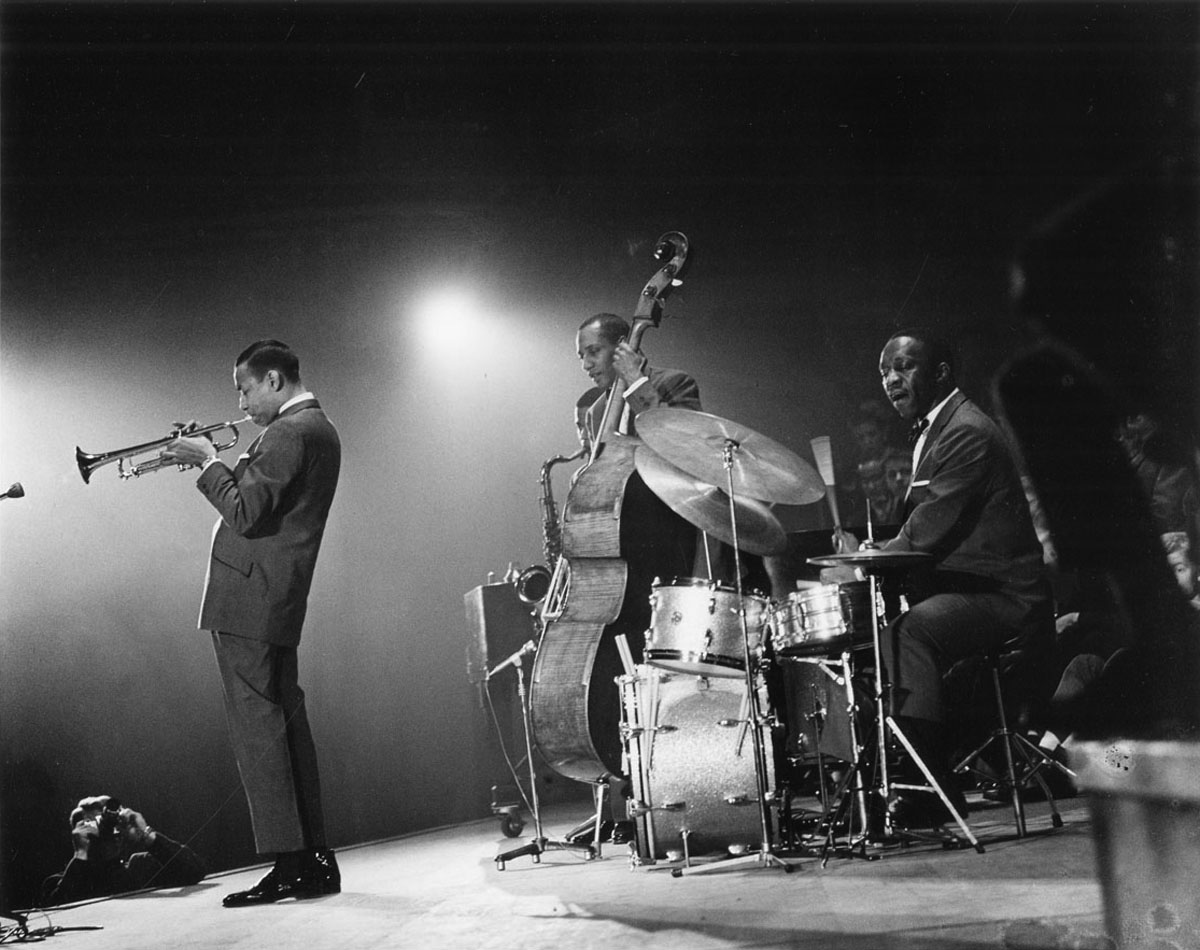
Hero photograph: Ben van Meerendonk / AHF, IISG Amsterdam, CC BY-SA 2.0. Cropped in the hero layout.
.jpg)